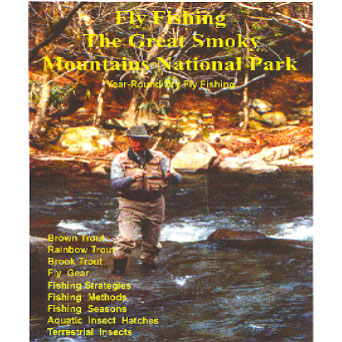
“Fly Fishing the Great Smoky Mountains National Park” (Year-round Dry Fly Fishing) contains over 4 hours (2 Disc Set) of information on the Great Smoky Mountains National Park. It covers all the streams, hatches, methods, tactics, techniques and strategies
Click Here For More Information
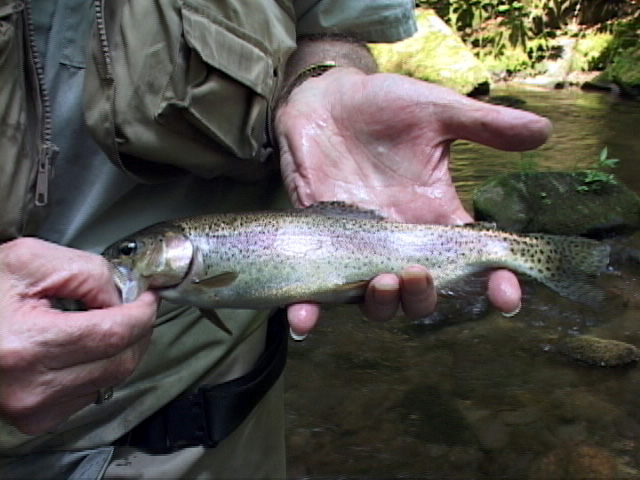
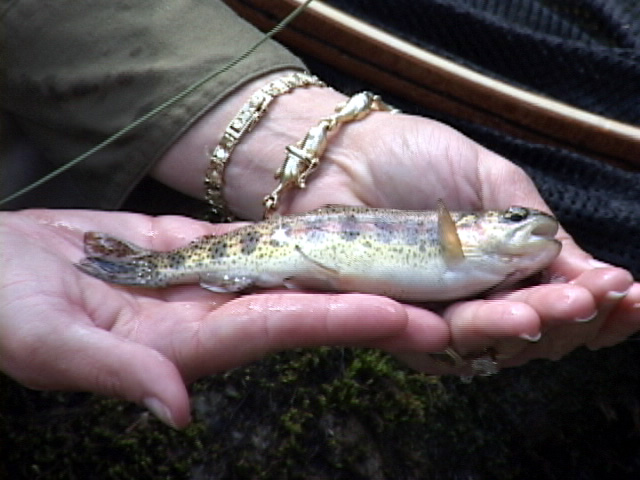
park. This one measured over
13 inches. Fish like this are not
common.
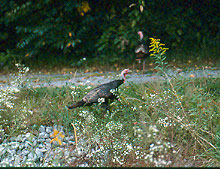
on the way to your destination. For
some reason there always seems
to be more spotted on a rainy day.
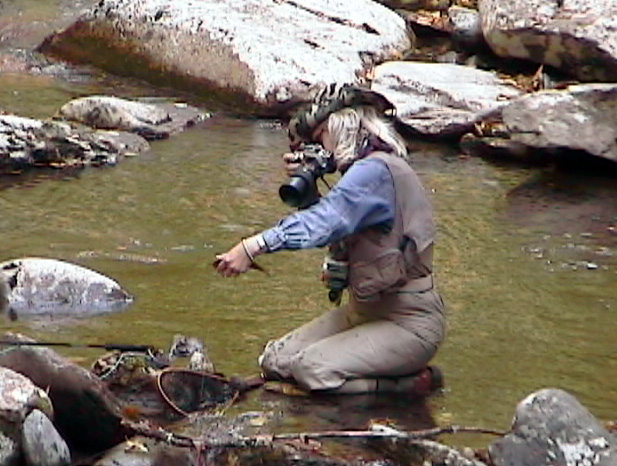
This way you can show others
the beauty of the fish and why
you returned it to the stream.
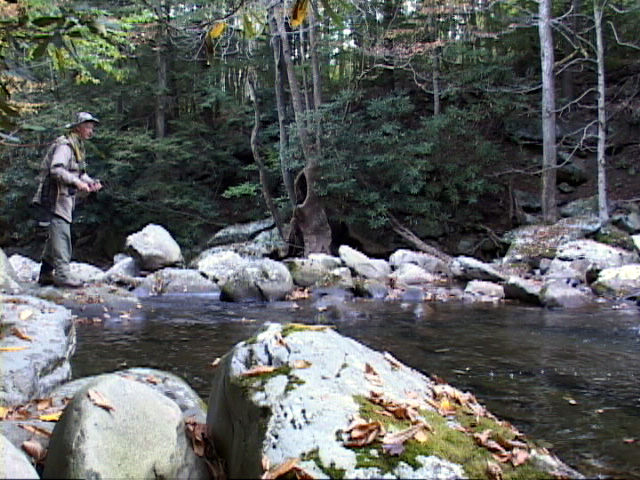
have large boulders that have
been rounded by water for many,
many years
Tennessee Side of the Park:
Anthony Creek Watershed
More Info: Main Page
West Prong of the Little River Watershed
More Info: Main Page
Middle Prong of the Little River Watershed
More Info: Main Page
East Prong of the Little River Watershed
More Info: Main Page
West Prong of the Little Pigeon River Watershed
More Info: Main Page
Middle Prong of the Little Pigeon River Watershed
More Info: Main Page
Cosby Creek Watershed
More Info: Main Page
Other Misc. Streams in Tennessee
North Carolina Side of the Park:
Straight Fork Watershed
More Info: Main Page
Big Creek Watershed
More Info: Main Page
Raven Fork Watershed
More Info: Main Page
Cataloochee Creek Watershed
More Info: Main Page
Oconaluftee River Watershed
More Info: Main Page
Deep Creek Watershed
More Info: Main Page
Noland Creek Watershed
More Info: Main Page
Forney Creek Watershed
More Info: Main Page
Hazel Creek Watershed
More Info: Main Page
Twentymile Creek Watershed
More Info: Main Page
We have divided the fly-fishing waters in the Great Smoky Mountains National Park into (19) nineteen major streams or watersheds that exit the park along with several minor streams that we lumped together under the two miscellaneous categories. With the exception of Little River, each watershed is designated by the name of the stream that exits the Park.
Little River is divided into its three main tributary streams because the main stream of the Little River exists only for approximately a mile within the park’s boundaries.
Tributary Streams:
Most of these watersheds have tributary streams, some of which are comparatively large. These tributary streams are included along with the watershed streams that exit the park.
Irrespective of how you categorize them, we are covering all of the streams in the park one could rightly call fishable water for trout.
Stream Size:
Occasionally we will say “small, medium and large” when we are describing some of the streams. By that we mean a “small” size small stream, a “medium” size small stream and a “large” size small stream. There isn’t any large streams as such inside the park. They are all “small” streams when compared to other streams nationwide that support trout.
Trout Size:
You will also hear us refer to the trout as small, medium and large. By that we mean small, medium or large as compared to the “other trout in the park”, not other trout nationwide. For example a small rainbow would be one less than five inches long, a medium size rainbow one that is five to nine inches long and large size rainbow on that is nine to twelve inches long or larger. This is because as we have previously mentioned, the rainbow trout in the park average about 5 to 8 inches long. Brown trout can grow to much larger sizes. Fish over 20 inches are common. Brook trout average only about 4 to 8 inches long.
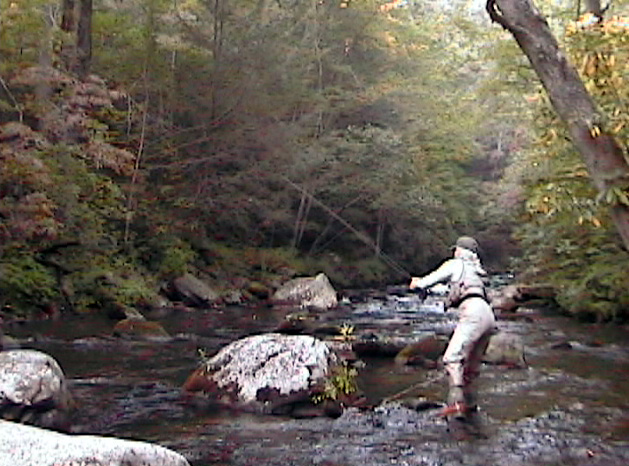
fish during the fall season. It can
provide some nice fish and you
want have any competition.
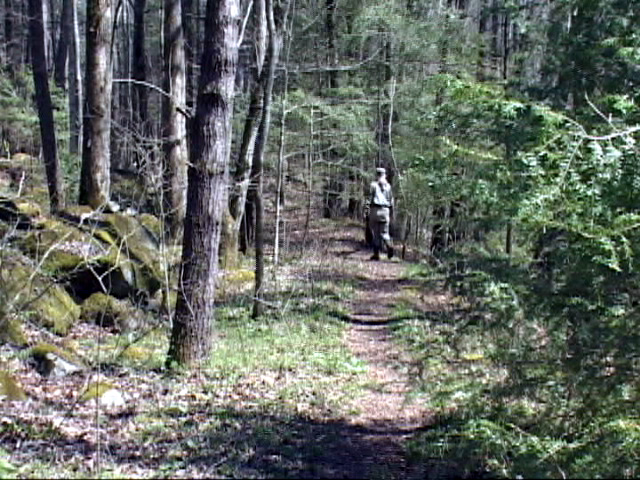
roads and the crowds is the best
way to find water that hasn’t
been disturbed by anyone.
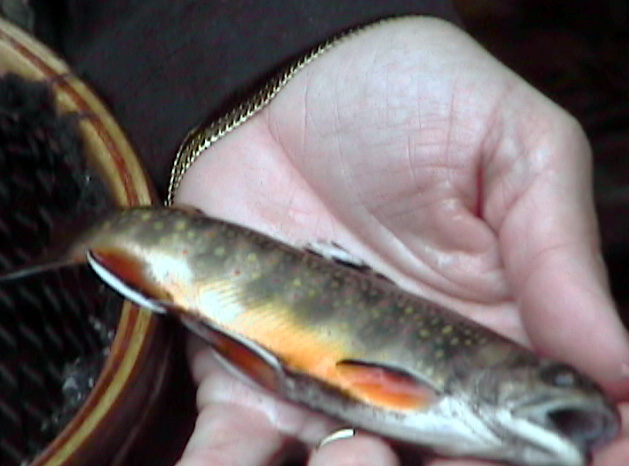
3,000 feet in elevation. They are
Brook Trout the only native trout
(actually char) that are found in
the park.
rainbow trout except a few that
are in the highest elevations and
a few the park has removed
them from to help the brook trout.
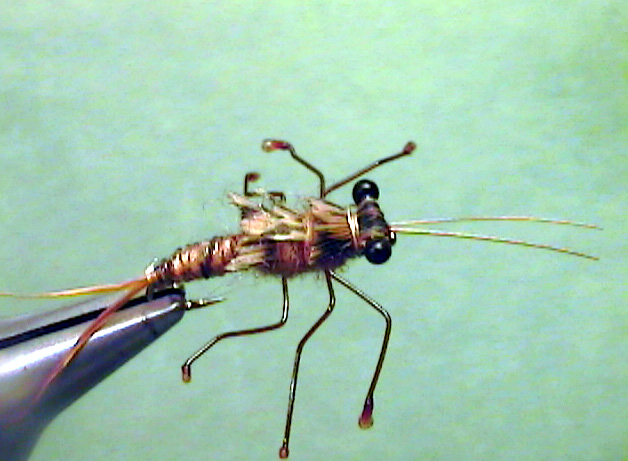
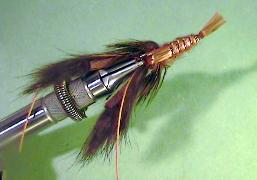
Many of the streams in Great Smoky Mountains National Park have smallmouth bass. Lower Little River is one of the better smallmouth streams.
Our “Perfect Fly” Brown Crayfish fly is an excellent fly to use for the smallmouth bass. It closely resembles the crawfish (crayfish) that are in the park streams. Large brown trout will also take this fly as the crayfish are a part of their diet and one reason they get so large.