liners offer the ability to change
types of flies without changing
the fly box.
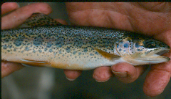
water more than the brown or
brook trout. They seem secure
beneath the broken surface of
fast water runs, riffles and
plunges. Most of the dry flies
you use to catch them should
have the ability to float in the
fast water without sinking.
smokies taken in the heat of the
summer in low water
conditions. A light tippet, long
cast, low light conditions and a
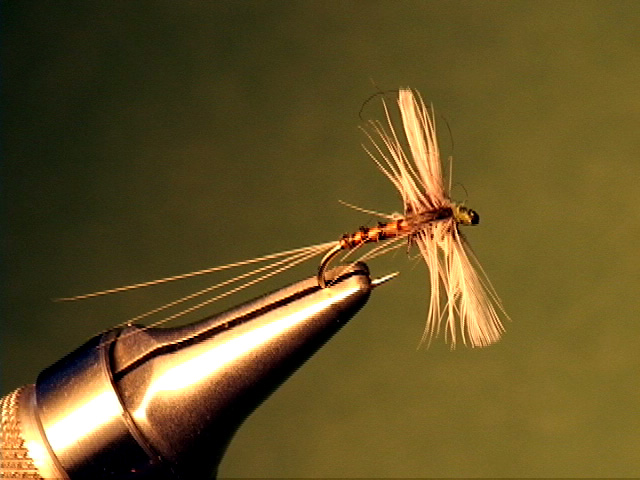
size 20 Blue-winged olive
fooled the fish.
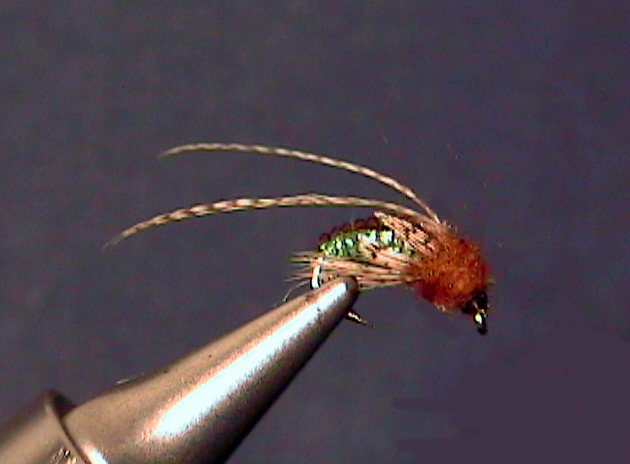
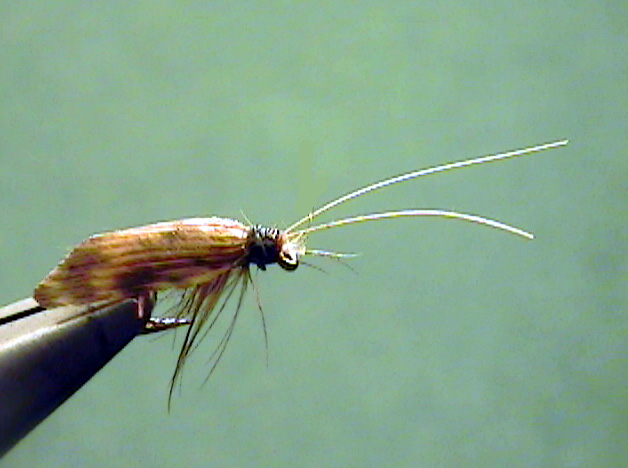
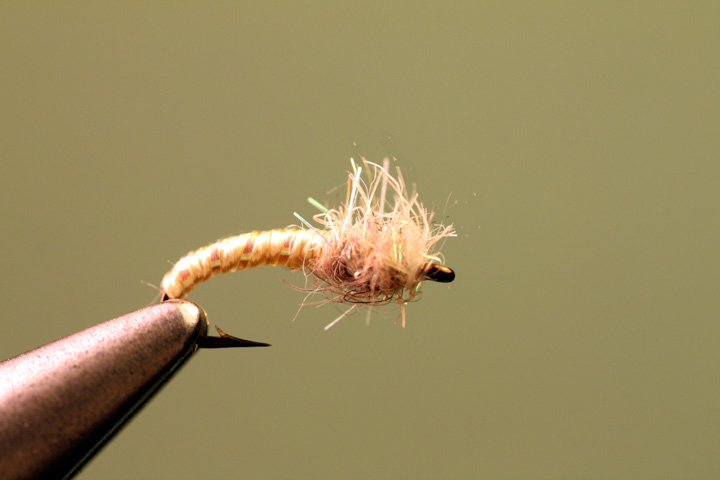
Sedge Larva
Spinner
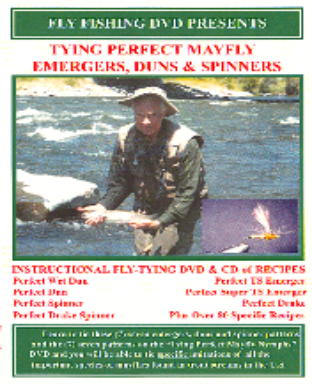
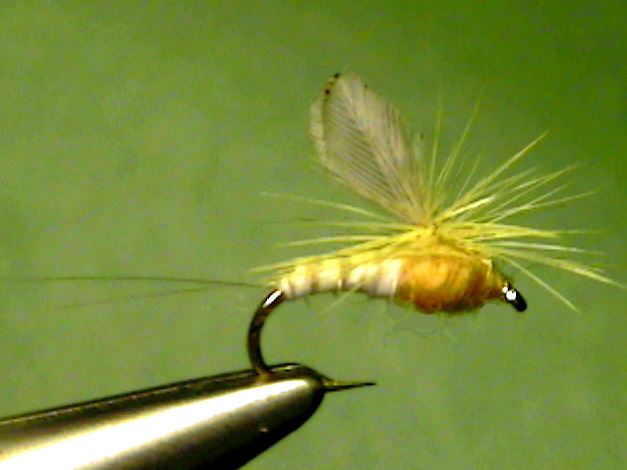
Emergers & Spinners”: This
new instructional DVD (& CD
of recipes) teaches you how
to tie 7 basic “Perfect Fly”
patterns. By changing the
sizes and colors of materials
according to the recipes, you
can tie over 120 specific
imitations or flies that imitate
mayfly duns, spinners and
emerging duns.
Click Here for More Info & Purchase
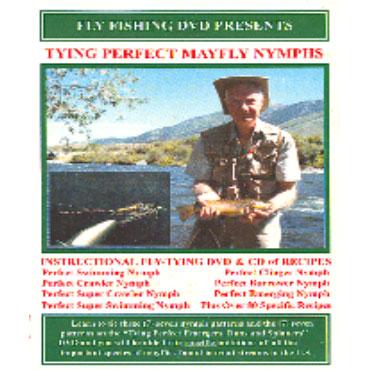
Nymphs” : This new
instructional DVD (& CD of
recipes) teaches you how to
tie 7 basic “Perfect Fly”
patterns. By changing the
sizes and colors of materials
according to the recipes, you
can tie over 80 specific
imitations or flies that imitate
all the important species of
mayfly nymphs.
Click Here for More Info & Purchase
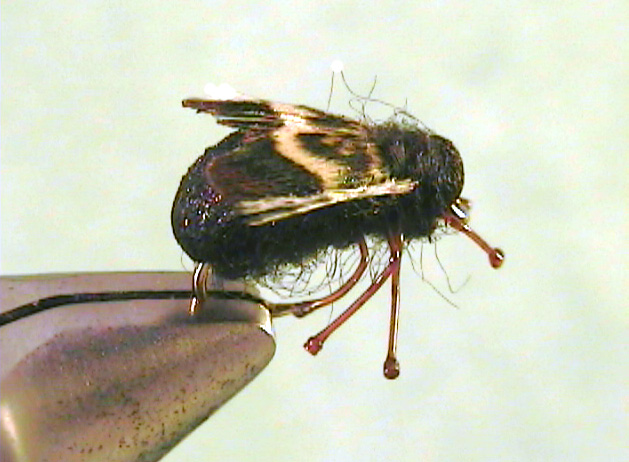
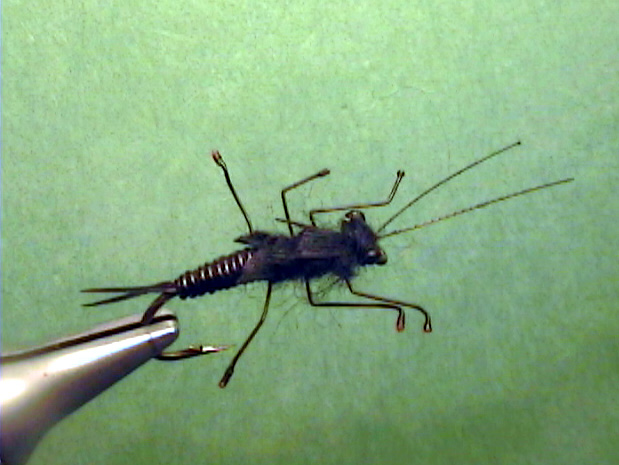
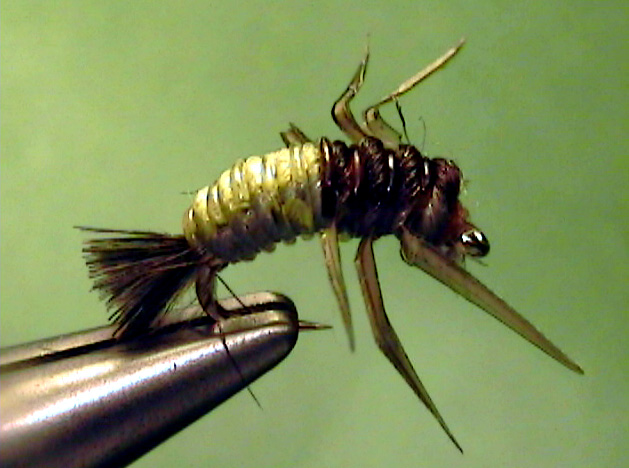
Black Stonefly Nymph
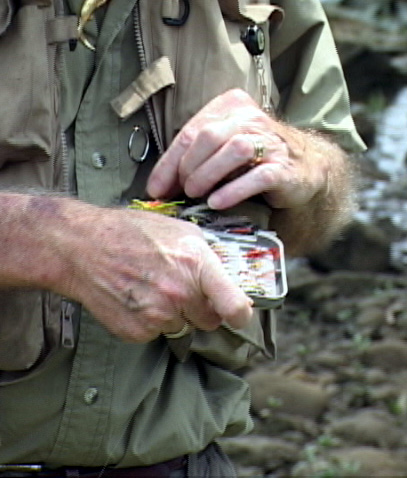
The most often asked question in fly-fishing is “what fly do I use”? Trout in the Smokies or anywhere in the World for that matter, do not feed on feathers, hair and metal hooks. They feed on insects, crustaceans, fish and other food that is available in the streams. Often when anglers select flies they begin to think, act and sometimes appear to actually believe that fish recognize and feed on such things as a Royal Trudes or Adams Mayflies.
Special Articles on Choosing The Right Fly:
Is the Fly Important?
Your Fly From the Fish’s Point of View
| Click on the Types of recommendations. Mayflies Caddisflies Stoneflies Midges Streamers Terrestrials | Click on the Hatch Charts below for Hatch Times Spring Hatch Chart Summer Hatch Chart Fall Hatch Chart Winter Hatch Chart |
Selecting Flies:
When you are selecting a fly to use in the Smokies or for that matter, anywhere else, you should first ask yourself “what are the trout most likely eating”. What food is most available and plentiful for the trout to eat? That will be what the trout are focusing on. Matching that food will give you the highest odds of success.
Hatch Charts:
Print a copy of the hatch chart of the stream (included within this website) you are fishing and see what insects should be available for the trout to eat at the particular time you are fishing. If you don’t see the insects that should be hatching on the water, in the air or on the banks of the stream, it doesn’t necessarily mean that they are not there. Are you in the right type of water or section of the stream for the preferred habitat of that particular insect? Is it the right time of day for the hatch, spinner fall or egg ovipositing? Has the hatch been delayed by cold weather or has it already ended?
If you don’t see a substantial amount of insects in the air or observe trout feeding on insects on the surface of the water, then you could rightly assume that they are eating something below the surface. This most likely would be pupae or larvae of aquatic insects, sculpin, minnows or a few other things found in the water.
So, your first choice, if you are interested in catching trout more than you are casting for them, should be a nymph, larva or pupa imitation of an aquatic insect, or maybe a streamer that would imitate a sculpin or baitfish. If you know how to read a hatch chart (how to read a hatch chart) then this would be by far your best clue as what fly to use.
Examine the Water:
If you don’t have a hatch chart, or you don’t see the insects shown on the hatch chart, then carefully examine the bottom of the stream and observe what insects you find in abundance. Remember that mayfly swimmer type nymphs (such as blue-winged olives) are going to spook like minnows and are difficult to see. Clinger nymphs stay hidden down between and below the rocks on the bottom and are usually present although you don’t see them. Many of the insects that trout feed on such as midge larvae and pupae, small mayfly nymphs, and small caddisfly larvae and pupae are very difficult to observe. In many streams, anglers would pick up rocks from the stream bed and observe the insects that attach to them. This is illegal in the Great Smoky Mountain National Park. You are not supposed to move or remove rocks in the streams.
Check the surface of the water for emerging mayfly nymphs or caddisfly pupae. The small ones are very difficult to see. The best way would be to use a small skim net to catch whatever is in the surface film. Check the surface for spinners. They are difficult to see because they usually fall in low light situations and float flat on the surface or in the surface skim.
Check the Banks:
Don’t fail to check the banks, trees, bushes and grass. Are there any terrestrial insects such as hoppers, ants, beetles, inch worms, etc., there in abundance? By the way, do not harm any of these insects or pupae and larvae found in the water and do not collect them. It is illegal and does not do the stream, fish or animals any good to do so.
No Hatch to Match:
Most of the time you are not going to observe insects very easily. Most of the time they are not any hatches underway. The “no hatch to match” condition is common. It would not be common for you to find no insects in the water. If it is late summer or during the fall season, you will not find as many large ones as you would in February or March for example, but you should still find plenty. Midge larvae and pupae are not very visible but most likely they are there. Don’t forget or overlook them. They are a very important part of the diet of the trout in the Smokies. If you don’t find any aquatic insects, then you better get out of there and find some place trout can exist. If there is no food, there are no trout in the stream you are fishing. That is a fact.
The key is to use a fly that matches the larva or pupae stage of what the hatch chart shows; or to match the most abundant insect you can find on the stream or in the water that trout may feed on – with a fly.
Matching the Hatch:
If you are lucky and you observe mayflies, midges, stoneflies or caddisflies hatching, then match the appropriate stage of life of that insect with a fly – an emerger, dun or adult, or spinner/.
Choose the fly by first matching the size, then shape and finally shade of color of the natural at the stage of life you are attempting to imitate. Remember, choosing the right fly is only a part of it.
Matching the Behavior of the Insect:
More importantly, you should match the behavior of that particular insect or other trout food. Your fly must not only look like the natural, it must act like the natural. This gets down to the presentation of the fly. Presentation is almost always more important than how well the fly matches the natural.
In order for you to make the proper presentation of any insect at its various stages of life, it is necessary that you know how it behaves. This means where it lives in the nymphal stage of life; when it is available to the trout; how it emerges; when, where and how the adult stages of the insect are subject to being eaten by trout; when, where and how the females deposit their eggs; and when, where and how they die. If caddisflies dive to deposit their eggs on the bottom, you need to know it and how to imitate that behavior. If mayflies emerge on the bottom of the stream rather than the surface, you need to know it and how to imitate it. These are examples of numerous activities that you should be familiar with if you are going to successfully imitate aquatic insects. If you don’t, you are relying on pure luck to catch trout rather than knowledge.
Recommended Flies:
For each insect or trout food item, we recommend two flies. The first flies we recommend are those that can be purchased commercially which are flies that we have found to be common and available at most fly shops and outfitters. There may be a more exact imitation than the one we recommend but not readily available on a wide scale basis. We are not implying that our recommendations are always the best flies, although they may well be. We are implying only that they are normally adequate imitations that can be easily acquired.
Perfect Flies:
The “Perfect Flies” we are recommending are our own patterns. By “perfect fly”, we simply mean one that catches fish. The name “Perfect Fly” is not meant to imply that they are perfect in reality. The patterns are usually, as most patterns are, modifications of other very successful patterns but in many cases, with colors and materials that more accurately imitate the natural.
Fly Color:
Since the color of insects sometimes vary from stream to stream, you should always try to verify the match as best you can by comparing your fly with the natural found on the stream. You will notice that our patterns generally fall somewhere in between very realistic imitations and impressionistic imitations. By realistic, we do not mean to imply that every leg, eye, and detail is imitated to perfection, only that they resemble the natural.
Difficulty in Tying and Fishing:
The Perfect Fly patterns are not necessarily the easiest flies to tie and in some cases, they may not be as durable as other flies. Some patterns, especially those utilizing CDC feathers, are designed to be presented in smooth flowing water where the insects are most likely to be found and should not be presented in rough, turbulent water. If you are having problems with the fly floating correctly or seeing it well, it may be that you are fishing it incorrectly or in the wrong types of water.
Perfect Flies are available at: www.Perfectflystore.com
Copyright 2013 James Marsh
rather what it imitates.