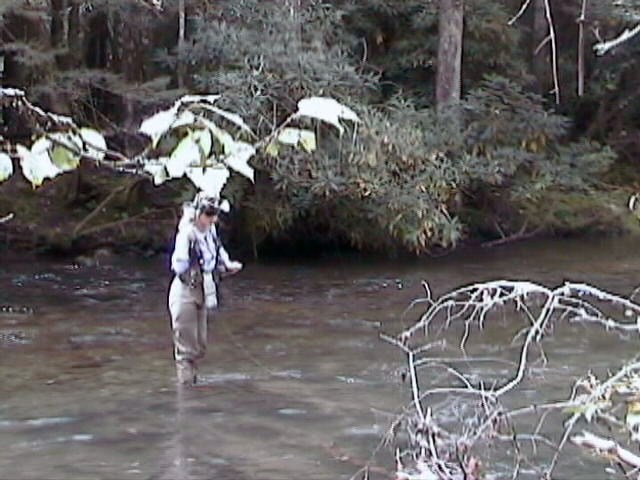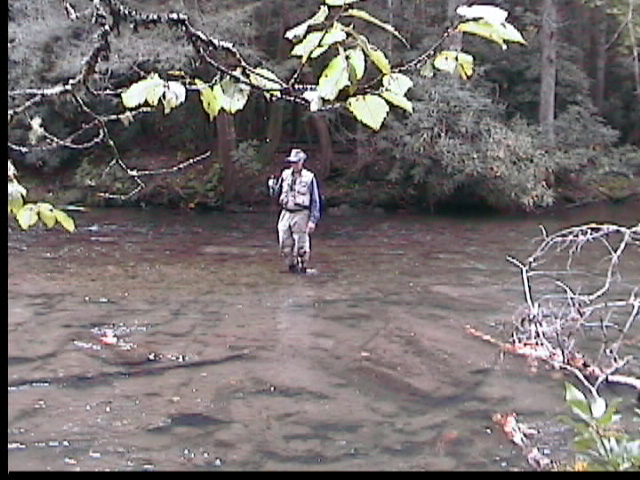
Since much of the water comes
from underground it’s usually very
clear.
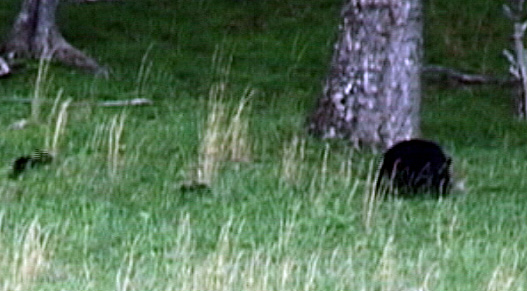
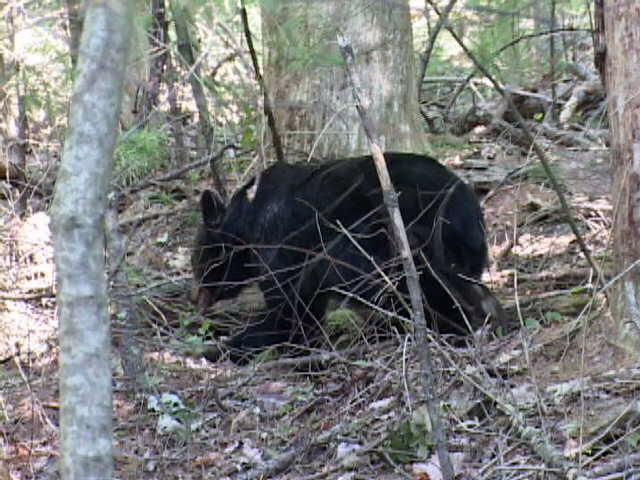
Bears are a common sight in
Cades Cove. It’s an excellent
place to see all type of wildlife.
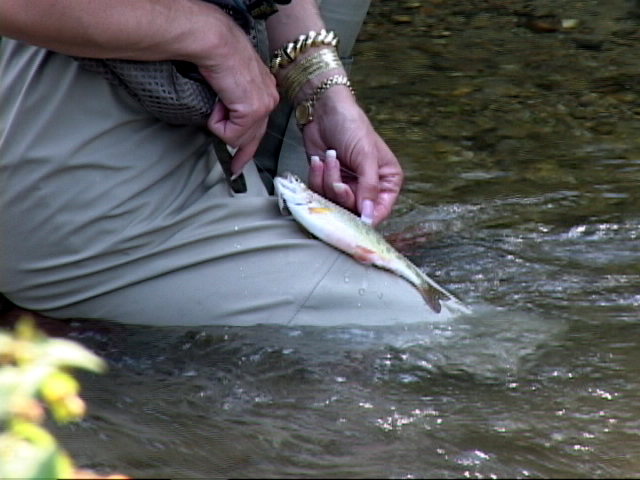
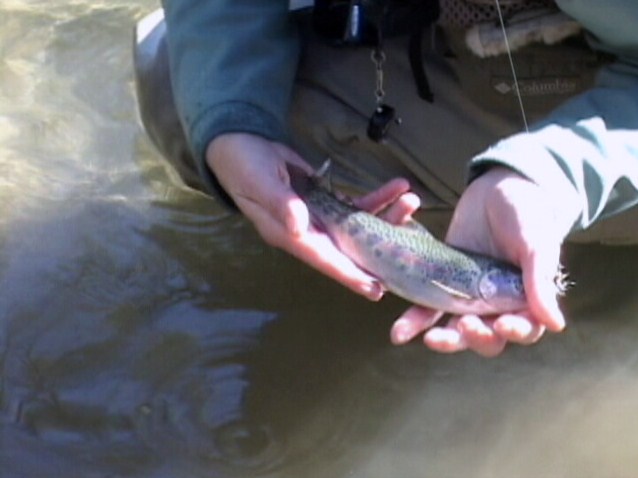
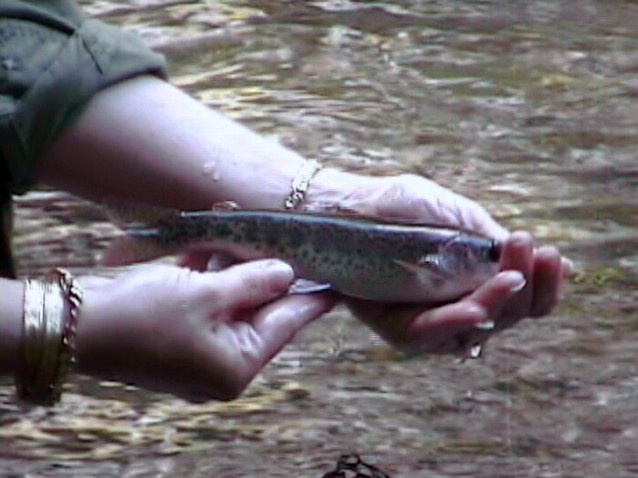
Rainbows get almost twice this
size in Abrams. It’s not unusual
for angler to catch one over 12
inches long.
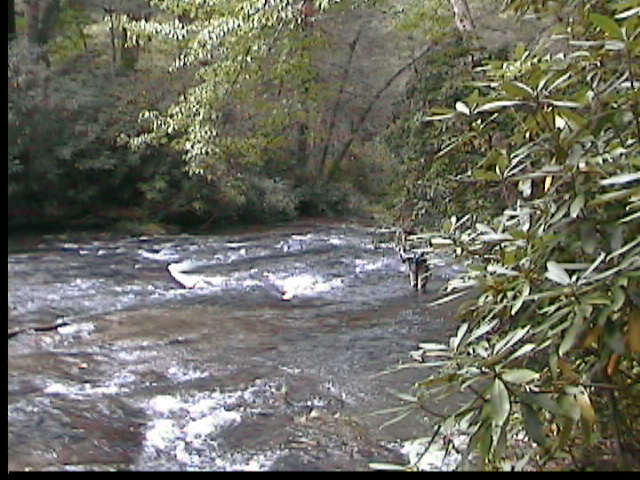
Even though the water is a little high,
it’s often clear and very fishable
when other streams aren’t.
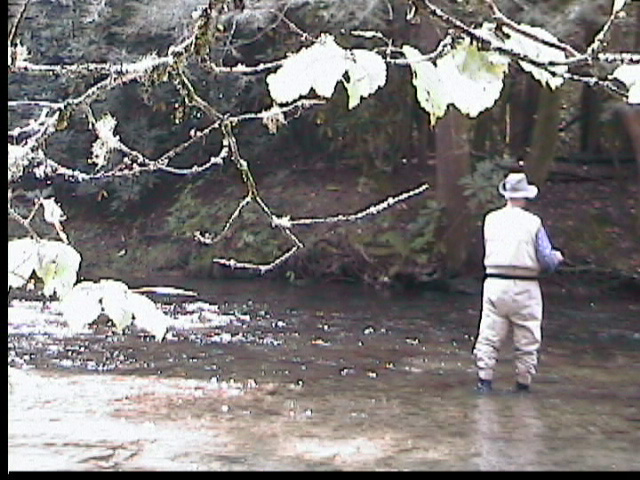
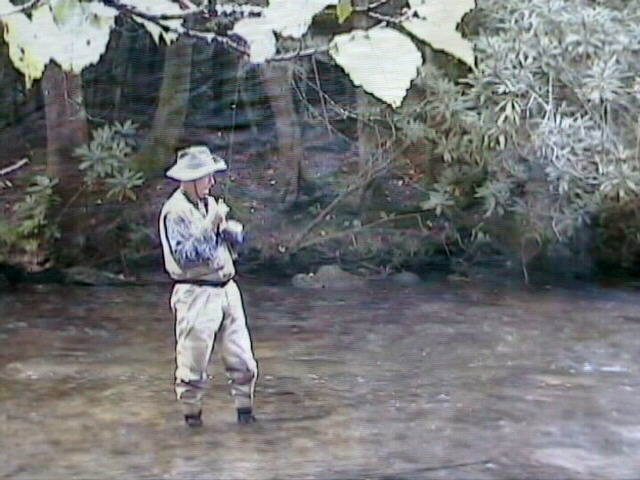
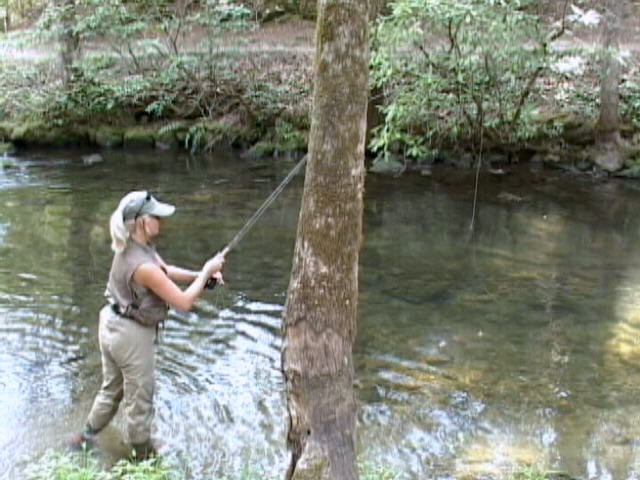
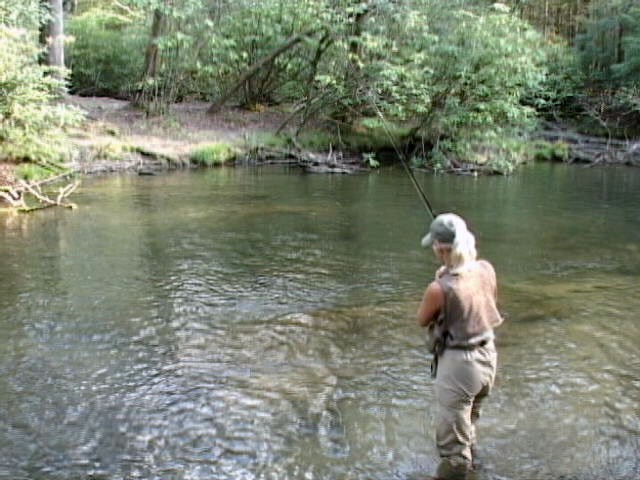
Abrams is a large enough stream
to provide decent casting room.
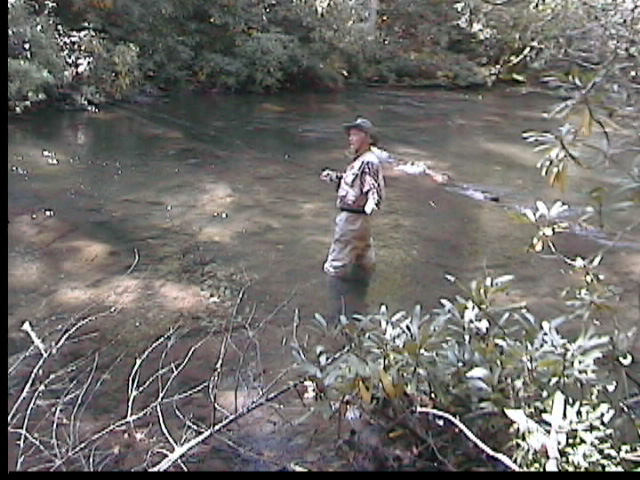
stream slows the flow enough
that the trout often get a good look
at your fly. This makes the fly
pattern and presentation even
more important than it is on many
other streams in the park.
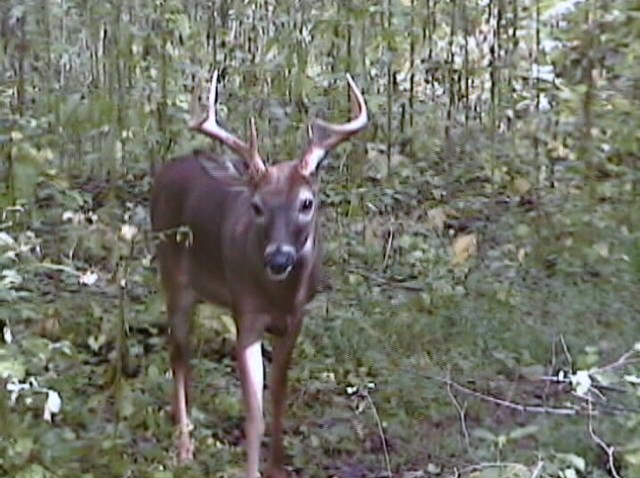
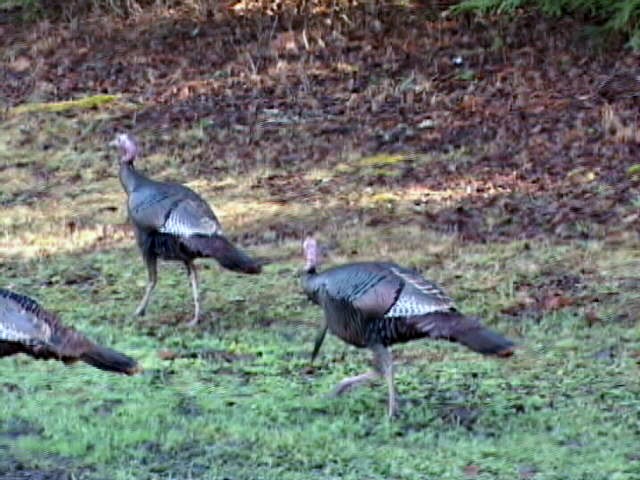
Deer, turkey and bears are plentiful
Description:
Abrams Creek is considered by many anglers to be one of the best streams in the park. It has a much better water chemistry than other streams in Great Smoky Mountains National Park and consequently, good quality fish.
Abrams Creek receives much of its water from Anthony Creek, which for the most part, flows underground through the Cove. The streams passage through limestone raises the PH of the water. The water that stays above ground flows through the fields and pastures of Cades Cove where it receives nutrients from the resident horses and other animals. This also raises the PH value of the water. The higher than normal PH level, means there is more food for the trout and consequently, larger trout.
Stream Size:
The stream is a medium to large size stream in comparison to other streams in the park. Pushed to draw a line, we would classify it as a large stream.
Accessibility:
If you plan on fishing Abrams from the Cades Cover area, and you certainly should, you should be aware of the gate opening and closing times at Cades Cove Road, not to even mention the possible heavy traffic. If you fish the stream during autumn’s leaf-looker season, for example, you would certainly need to allow for a slow ride through the valley, not to mention the probable bear jams.
Abrams can also be accessed from the Abram Creek Campground at the South end of the park. At this point the stream has more smallmouth bass than trout during most of the season. From the campground downstream, access is difficult to say the least. There are no formal trails that border the stream. It’s almost fourteen miles to the Chilhowee Reservoir and fishing downstream wading the stream can be difficult because of the deep pools. Much better fishing for rainbow trout is available upstream, starting at an area known as Little Bottoms.
If you enter the stream from Cades Cove you should be familiar with the streams path relative to the trail. The horseshoe, as it is known, is a circular curve in the stream’s course that’s a mile long. The stream leaves the trail at one end of the horseshoe and returns to the trail at the other end. Fishing it takes a full day for most anglers. Another similar curve in the creek just above the Abrams Falls Trailhead is about three-fourths of a mile. It takes at least a half-day to fish and negotiate the stream.
Difficulty:
Accessing the stream from Cades Cove can be good or bad depending on several things. If you get there first you should certainly hope that other anglers that may appear later are courteous and respectful of the water you choose to fish. If you are willing to make a day of it and wade either of the horseshoe curves that leave the trail, here again, make sure you are there first or you may be fishing behind thosethat beat you there all day.
If you manage to maneuver around these deterrents, you could be in for an excellent day but here again, that may depend heavily on where you fish the stream. If you’re adapt to fishing Pennsylvania’s spring creeks, then you will be challenged to fish the upper spring creek portion of Abrams Creek. If not, and your luck depends heavily on surprising the opportunistically feeding trout, you should head downstream. The farther you fish downstream, the more the creek looses its spring creek characteristics and become more like a freestone stream.
Downstream of the confluence of Mill Creek, the stream becomes part high alkalinity level, spring creek water, and part low alkalinity level, acidic water that’s still great for the trout.
Average Fish Size:
The rainbow trout in Abrams Creek are as large or larger as any found in the park and there’s a valid reason for it. The stream has an ample abundance of food for the trout to eat primarily because of the high PH value of the water.
Tributary Streams;
Rabbit, Panther and Mill Creeks are the main tributary streams of Abrams Creek.
Mill Creek:
Mill Creek enters the stream at the Abrams Falls parking area. As we said, this stream adds water on the acidic side of the PH scale to the spring creek water. Mill Creek is about the same size as Abrams Creek at that point. The different types of water in these two streams becomes very obviously at this point. The color of the limestone spring creek type water and the acidic water of Mill Creek mixes in sharp contrast.
Not far upstream from its confluence with Abrams Creek, Mill Creek receives water from another freestone stream, Forage Creek. Above that point, Mill Creek is a very small and tightly covered stream.
Forge Creek:
Forge Creek is a small tributary of Mill Creek that’s covered by the overhanging limbs of trees and brush, and slightly difficult to fish. It’s usually full of small, eager rainbows that are fun to catch. Forge Creek is easily accessed.
Rabbit Creek:
Rabbit Creek enters Abrams Creek about three and one-half miles upstream of the Abrams Creek Campground. It can also be accessed via the Rabbit Creek Trail if you care to hike almost five miles from the trailhead at the Abrams Falls parking area. This is too far for most anglers to hike when they can fish Abrams Creek and probably catch more trout. Nevertheless, those anglers that care to camp at the remote campsite may well choose to fish Rabbit Creek over Abrams Creek, at least for a portion of their camping trip.
The uppermost part of the stream can be reached from Parson’s Branch Road but it’s very small at this point. Rainbows are the main species you will catch in Rabbit Creek.
Panther Creek:
Panther Creek is yet another tributary stream of Abrams Creek. It intersects Abrams Creek down stream of the Abrams Creek Campground near the mouth of Chilhowie Reservoir but it’s easier to access the upper portion of the stream from the Parson Branch Road. This small stream normally has a very good population of rainbows.
Comments:
The upper spring creek portion of the Abrams Creek be fished during extremely cold weather. Its spring creek type water comes from underneath the ground and is always warmer than the water in the freestone streams.
Copyright 2011 James Marsh